When I begin to design a course, I do so with the intention of creating a class that is  welcoming and engaging for all students; I aspire for each student to be as passionate about what I teach as I am. I am deliberate in selecting resources that will reflect this philosophy. One way I do this is to choose books that represent a diversity of ethnicities, cultures, perspectives and life-style choices.
Literature and other materials I regularly teach, or have recently taught, that pertain to multiculturalism and inclusion:
African-Americans:
- Monster, by Walter Dean Myers
- The Skin I’m In, by Sharon Flake
 Bud, Not Buddy, by Christopher Paul Curtis
- Roll of Thunder, Hear My Cry, by Mildred Taylor
- Life of Frederick Douglass, an American Slave (excerpts)
- Up From Slavery, by Booker T. Washington
- When I Was a Slave: Memoirs from the Slave Narrative Collection, by Norman Yetman
- Slavery Time When I Was Chillun, by Belinda Hurmence
- Brer Rabbit Stories, by Joel Chandler Harris
- The Watsons Go to Birmingham, by Christopher Paul Curtis
- “Born in Slavery: Slave Narratives from the Federal Writers’ Project, 1936 to 1938″ Library of Congress
- Clover, by Dori Sanders
- The Other Wes Moore, by Wes Moore
- Amazing Grace, by Jonathan Kozol
- Heaven, by Angela Johnson
- Black Boy, by Richard Wright
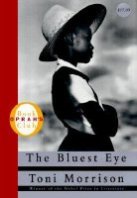
- The Bluest Eye, by Toni Morrison
- Fist Stick Knife Gun: a personal history of violence, by Geoffrey Canada
- Scorpions, by Walter Dean Myers
- 145th Street Short Stories, by Walter Dean Myers
- The Adventures of Tom Sawyer, by Mark Twain
- To Kill a Mockingbird, by Harper Lee
- The Autobiography of Malcolm X (excerpts)
- “Letter from the Birmingham Jail,” by Martin Luther King
- “I Have a Dream,” by Martin Luther King
- “Primer For Blacks,” by Gwendolyn Brooks
- “To Be Young, Gifted and Black,” by Weldon Irvine
 “Mother to Son,” by Langston Hughes
- “The Negro Speaks of Rivers,” by Langston Hughes
- Pariah (film)
- Hoop Dreams (film)
- Boyz ‘N the Hood (film)
- Unchained Memories: Readings from the Slave Narratives (documentary)
- Being Poor, Black, and American (weblink)
Multiculturalism:
- American Born Chinese, by Gene Luen Yang
- The House on Mango Street, by Sandra Cisernos
- Persepolis, by Marjane Satrapi
- A Step from Heaven, by An Na
- The Absolutely True Story of a Part-Time Indian, by Sherman Alexie
- Baseball in April and Other Stories, by Gary Soto
- The Jungle, by Upton Sinclair (excerpts)
- The Education of Little Tree, by Forrest Carter
- 97 Orchard: An Edible History of Five Immigrant Families, by Jane Ziegelman
- “First Days at Carlisle” by Luther Standing Bear
- “Indian Education” by Sherman Alexie
- “Crazy Horse Malt Liquor and other Cultural Metaphors” by Michael Dorris
- “A Half-Breed’s Dream Vacation” by Tiffany Midge
- In America (film)
- My Immigrant Story (weblink)
- Immigration Stories of Here and Yesterday (weblink)
- Children of Immigrants (weblink)
- Contrasting viewpoints – Native Americans:
- “New Deal Reforms Will Harm American Indians” by Flora Warren Symore
- “New Deal Reforms Have Helped American Indians” by John Collier
LGBTQ
- The Perks of Being a Wallflower, by Stephen Chbosky
- So Hard to Say, by Alex Sanchez
- Pariah (film)
Body Image/Body Dysmorphia
- Moose: A Memoir, by Stephanie Klein
- Fat Girl: A True Story, by Judith Moore
Victims of Abuse
- A Step from Heaven, by An Na
- Eleanor & Park, by Rainbow Rowell
- Speak, by Laurie Halse Anderson
- A Child Called It, by Dave Pelzer
- Three Little Words, by Ashley Rhodes-Courter
 Monica Belus